
Retatrutide — For women: everything you need to know about appetite
Read our full analysis of Retatrutide from the for women perspective, focused on appetite. Science, protocol, safety and results. Available in France via Synedica.
4 min read

Retatrutide · Triple agonist GLP-1 · GIP · Glucagon
Introduction
In this reference guide, we explore Retatrutide (Triple agonist GLP-1 · GIP · Glucagon) to help you make an informed choice based on current science and user feedback.
Next-generation peptide studied for weight management and glycemic control. Specific considerations for women, including cycle and menopause.
Key benefits
Here are the most documented benefits of Retatrutide in relation to appetite:
- Significant reduction in appetite and food noise
- Improved insulin sensitivity
- Progressive, sustained weight loss in clinical studies
- Better postprandial glycemic control
- Reduction in visceral fat linked to cardiometabolic risk
- Triple effect (GLP-1, GIP, Glucagon) outperforming mono-agonists
How it works
Retatrutide acts simultaneously on three key metabolic receptors: GLP-1, GIP and Glucagon. This triple activation creates a synergistic effect that mono-agonists cannot reproduce.
GLP-1 agonism slows gastric emptying and increases satiety. The GIP receptor improves postprandial insulin response. The glucagon receptor increases resting energy expenditure, setting Retatrutide apart from semaglutide or tirzepatide.
Phase 2 studies published in the New England Journal of Medicine in 2023 showed average weight loss of 17.5% to 24.2% depending on dose over 48 weeks — an unprecedented result for non-surgical pharmacological treatment.
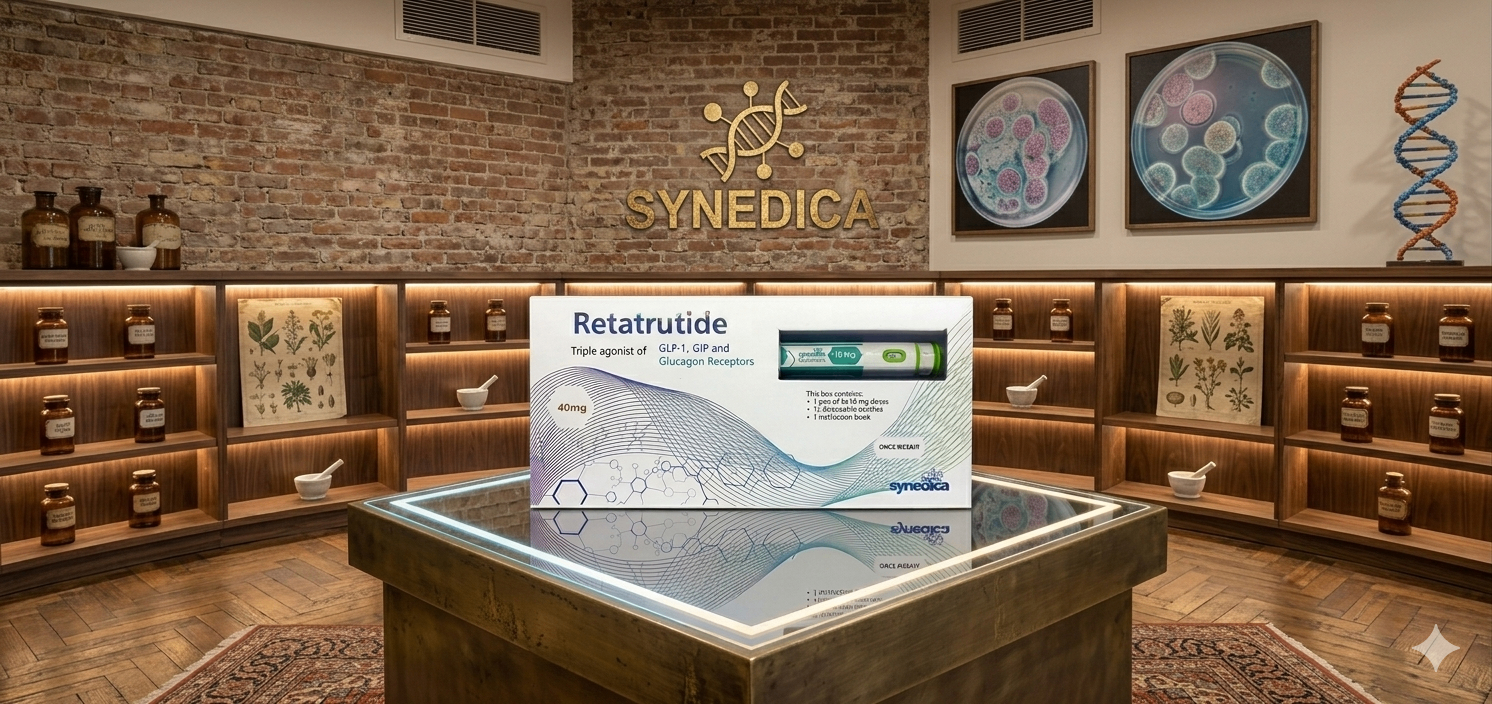
Related product
Retatrutide — Triple agonist GLP-1 · GIP · Glucagon
Next-generation peptide studied for weight management and glycemic control.
Usage protocol
Published protocols typically start at a low dose (2 mg/week) and increase every 4 weeks up to the individualized target dose.
Injection is subcutaneous, once weekly, ideally on the same day and time to stabilize plasma levels.
Gradual titration minimizes digestive side effects (nausea, excess satiety) common with GLP-1 agonists.
Expected results
User feedback converges: initial effects in the first weeks, then amplification over 8 to 12 weeks. Protocol consistency remains the number one factor for lasting results on appetite.
Safety and precautions
The most common side effects are digestive and usually transient. Gradual titration and adequate hydration reduce their intensity. People with diabetes, pancreatitis history or who are pregnant should consult a healthcare professional before use.
Frequently asked questions
- Is Retatrutide approved in France?
- It is in the final clinical trial phase. Synedica offers it as a research peptide with shipping across Europe.
- How is it different from Ozempic?
- Retatrutide is a triple agonist (GLP-1, GIP, Glucagon), while semaglutide (Ozempic) is a mono-agonist GLP-1. Weight loss outcomes are superior.
- How should it be stored?
- Refrigerated between 2 and 8 °C, away from light. Do not freeze.
- How long before results?
- A drop in appetite is often noted in the first week. Weight loss becomes significant after 4 to 8 weeks.
Keywords
Order in France
Visit the Synedica store for the full range, with tracked shipping from London across Europe.
Retatrutide · Metabolism & Weight Loss
Related articles
Retatrutide — Complete guide: everything you need to know about weight loss
BenefitsRetatrutide — Benefits: everything you need to know about appetite
The scienceRetatrutide — The science: everything you need to know about blood sugar
Complete guideNAD+ & B12 — Complete guide: everything you need to know about cellular energy
BenefitsNAD+ & B12 — Benefits: everything you need to know about longevity
The scienceNAD+ & B12 — The science: everything you need to know about mitochondria
Resources & Synedica network
Go deeper on each topic with our specialised guides, comparisons and tools published across the Synedica ecosystem:
- brand comparison
- lab news
- dose questions answered
- QR-code verification
- advanced titration protocol
- NAD+ & B12 — energy guide
- reconstitution guide
- Synedica manufacturer
- verified reviews and testimonials
- vial authentication guide
- cold-chain storage guide
- detailed product sheet
- weekly protocol
- peptide calculator
Direct access to the official site : official product page.